Contact Information
Ready to Attend Our Next Event? Contact Us to Get Started Now!
Discover and attend our upcoming events. Call us now to reserve your spot and join the excitement!
For Sponsorship Sales
- Tausif Shaikh
- +971 58 593 9942
- tausif.shaikh@inoexglobal.com
For Speaking Slot
- Arif KP
- +971 55 661 0934
- arif@inoexglobal.com
Office Address
Office 30. 3rd floor, Rasis business center, Al Barsha 1, Dubai
Email Address
info@inoexglobal.com
Phone
+971 58 593 9942
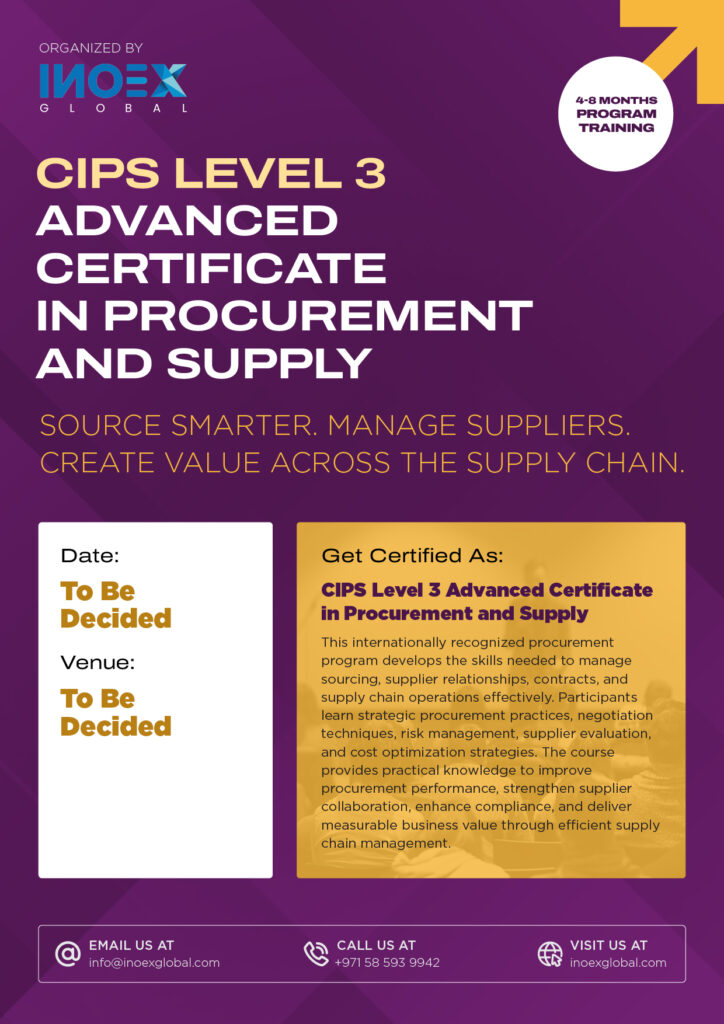
CIPS Level 3 Advanced Certificate in Procurement and Supply
Enroll in CAMA II
- TBD
- 60–120 Hours / 4-8 Months
About this Program
Program Overview
The CIPS Level 3 Advanced Certificate in Procurement and Supply is an internationally recognized qualification designed for procurement professionals seeking to enhance their knowledge, skills, and practical understanding of procurement and supply chain management. Awarded by the globally respected Chartered Institute of Procurement & Supply (CIPS), this qualification builds upon foundational procurement concepts and develops the competencies required to manage procurement activities more effectively within modern organizations.
In today’s highly competitive business environment, procurement professionals play a strategic role in driving cost savings, supplier performance, risk management, sustainability, and business growth. The CIPS Level 3 qualification equips learners with the knowledge needed to manage supplier relationships, negotiate effectively, understand procurement processes, and contribute to organizational success through efficient supply chain practices.
The course combines practical procurement principles with strategic business concepts, helping professionals understand how procurement influences organizational performance, operational efficiency, and long-term value creation.
Who Should Attend
Target Audience
- Procurement Executives
- Purchasing Officers
- Procurement Coordinators
- Buyers and Senior Buyers
- Supply Chain Executives
- Vendor Management Professionals
- Contract Administrators
- Inventory Controllers
- Logistics Coordinators
- Materials Management Professionals
- Supply Chain Analysts
- Procurement Assistants
- Category Executives
- Commercial Executives
- Operations Professionals
Key Focus Areas
Procurement and Supply Operations
- Procurement processes and procedures
- Purchasing cycle management
- Supplier selection and evaluation
- Procurement documentation
Supplier Relationship Management
- Supplier performance measurement
- Supplier collaboration
- Vendor development strategies
- Strategic supplier partnerships
Contract and Commercial Management
- Contract formation
- Terms and conditions
- Commercial negotiations
- Contract administration
Strategic Sourcing
- Market analysis
- Category management
- Cost reduction strategies
- Value-based procurement
Supply Chain Management
- Inventory management
- Logistics coordination
- Demand planning
- Supply chain optimization
Risk and Compliance
- Procurement governance
- Ethical procurement practices
- Risk mitigation strategies
- Regulatory compliance
How the Course Covers Key CIPS Level 3 Procurement and Supply Concepts
01
Module
Procurement and Supply Environments
Participants learn:
- The role of procurement in organizations
- Internal and external business environments
- Procurement functions and responsibilities
- Procurement’s contribution to organizational success
02
Module
Ethical Procurement and Responsible Sourcing
The course covers:
- Ethical procurement practices
- Corporate social responsibility
- Sustainable procurement principles
- Supplier code of conduct
- Governance and compliance requirements
03
Module
Procurement Process Management
Learners gain knowledge of:
- Procurement planning
- Supplier sourcing methods
- Tendering processes
- Purchase order management
- Procurement documentation
04
Module
Supplier Selection and Management
Participants explore:
- Supplier qualification criteria
- Supplier evaluation methods
- Performance management systems
- Supplier relationship development
- Vendor performance improvement strategies
05
Module
Contract Management
The training includes:
- Contract principles and frameworks
- Commercial terms and conditions
- Risk allocation
- Contract administration techniques
- Managing contract performance
06
Module
Negotiation Skills
Learners develop capabilities in:
- Negotiation preparation
- Negotiation strategies and tactics
- Supplier engagement
- Conflict resolution
- Win-win negotiation approaches
07
Module
Supply Chain Operations
Participants learn:
- Supply chain fundamentals
- Inventory management principles
- Logistics and distribution
- Demand forecasting
- Supply chain performance improvement
08
Module
Procurement Risk Management
The course addresses:
- Supplier risk assessment
- Market risks
- Supply disruption management
- Business continuity planning
- Procurement risk mitigation strategies
09
Module
Cost and Value Management
Learners understand:
- Total cost of ownership (TCO)
- Cost analysis techniques
- Cost reduction initiatives
- Value creation strategies
- Procurement performance measurement
Key Learning Objectives
Procurement Competencies
- Understand advanced procurement and supply processes
- Manage procurement activities effectively
- Apply strategic sourcing techniques
- Conduct supplier evaluations and selection
- Support contract management activities
- Improve procurement efficiency and effectiveness
Commercial Skills
- Analyze procurement requirements
- Negotiate with suppliers confidently
- Manage procurement costs
- Evaluate supplier performance
- Identify value creation opportunities
Supply Chain Skills
- Understand end-to-end supply chain operations
- Improve supplier collaboration
- Manage procurement-related risks
- Support inventory optimization initiatives
- Contribute to supply chain resilience
Professional Development
- Enhance procurement decision-making capabilities
- Strengthen stakeholder management skills
- Develop strategic thinking in procurement
- Prepare for higher-level procurement responsibilities
Benefits
Professional Benefits
Internationally Recognized Qualification
CIPS is the world’s leading professional body for procurement and supply professionals. The Level 3 qualification demonstrates competence and commitment to professional excellence.
Career Progression Opportunities
This qualification supports career advancement in procurement and supply chain management, leading to roles such as Procurement Specialist, Senior Buyer, Procurement Executive, and Supply Chain Coordinator.
Enhanced Procurement Expertise
Professionals gain practical skills in strategic sourcing, supplier management, procurement negotiations, contract administration, and cost optimization.
Increased Employability
Organizations globally seek procurement professionals with recognized CIPS qualifications because they demonstrate industry-standard knowledge and best practices.
Strong Foundation for Advanced Qualifications
CIPS Level 3 provides a pathway toward higher-level procurement and supply chain certifications and professional chartered status.
Organizational Benefits
Improved Cost Efficiency
Organizations benefit from procurement professionals who can identify cost-saving opportunities while maintaining quality and service standards.
Better Supplier Performance
Enhanced supplier management skills contribute to stronger supplier relationships, improved service levels, and greater supply chain reliability.
Reduced Procurement Risks
Professionals trained in risk management help organizations identify, assess, and mitigate procurement and supply chain risks effectively.
Enhanced Compliance and Governance
Organizations strengthen procurement governance through improved understanding of ethical sourcing, compliance, and procurement policies.
Increased Supply Chain Resilience
Well-trained procurement teams help organizations respond more effectively to market disruptions, supplier challenges, and changing business conditions.
Greater Operational Efficiency
Improved procurement processes help achieve faster procurement cycles, lower costs, better supplier collaboration, and enhanced business performance.
Strategic Value Creation
Procurement professionals contribute beyond purchasing activities by supporting business growth, innovation, sustainability, and competitive advantage.